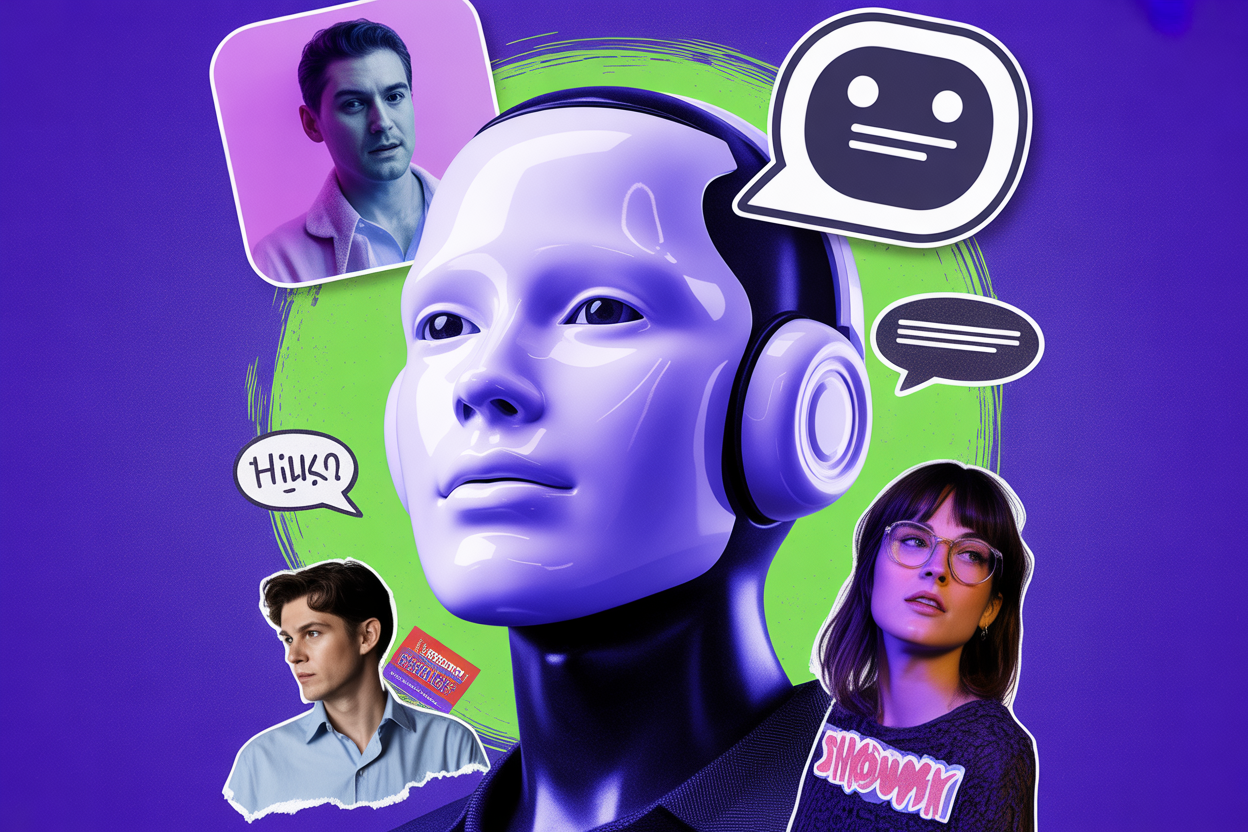
Chatbots transform customer service by handling routine queries quickly and letting human agents focus on complex problems, speeding up resolutions and improving support quality. They slash costs by automating common questions and offer around-the-clock availability that meets customer demand for instant digital help. But chatbots can frustrate users when they fail to resolve issues, so businesses must blend AI with human touch to keep customers satisfied.
The rise of chatbots in customer service is undeniable, with usage soaring 2350% from 2019 to 2021. Entrepreneurs and AI enthusiasts see chatbots as a smart investment for cost-effective, scalable, and fast customer support. However, no automation can fully replace human empathy and flexibility. Understanding both the benefits and pitfalls of chatbots helps companies design hybrid strategies that leverage AI power without losing personal connection.
How do chatbots enhance efficiency and speed in customer service?
Chatbots speed up customer service by handling routine queries autonomously, freeing human agents for complex tasks. This leads to faster problem resolution and higher-quality support.
Chatbots engage customers immediately and answer frequent questions without human delay. Businesses report that chatbot interactions reduced wait times significantly, letting human reps prioritize critical issues. The rapid response increases customer satisfaction and boosts agent productivity.
Key points:
- Chatbots handle repetitive queries instantly.
- Human agents focus on nuanced, complex issues.
- Chatbot interactions grew 2350% from 2019 to 2021, proving effectiveness.
Faster answers mean fewer frustrated customers and more efficient teams. Chatbots take the load off frontline staff, improving overall service speed.
What cost savings do chatbots bring to businesses?
Chatbots cut customer support costs by 20–30%, saving roughly $300,000 annually by automating common inquiries. Businesses reduce the need for large human teams handling repetitive tasks.
Automating high-volume, low-complexity questions lets companies manage larger customer bases without scaling headcount. This trims operational expenses while maintaining service quality.
Highlights:
- Up to 30% reduction in support costs.
- Significant annual savings around $300,000.
- Chatbots reduce workload for human agents.
For entrepreneurs, implementing chatbots means reallocating budget from support staffing toward growth or innovation. The ROI is clear when chatbots handle thousands of routine contacts quickly and cheaply.
Why is 24/7 chatbot availability crucial for modern customer support?
Chatbots provide round-the-clock support across platforms like messaging apps, SMS, and live chat, delivering instant responses anytime. This matches the expectations of digital-savvy customers who demand immediate answers.
Having customer service accessible 24/7 improves experience by eliminating wait times outside business hours. It also scales across multiple channels where customers naturally communicate.
Crucial points:
- Chatbots manage inquiries anytime, day or night.
- Support available via messaging apps, SMS, and live chat.
- Improves experience for customers who want self-service.
This nonstop availability helps companies stay competitive by meeting customers where and when they want.
What challenges do chatbots pose for customer satisfaction?
Despite benefits, chatbots create frustration; 72% of users say chatbot interactions waste their time, 80% feel increased frustration, and 78% still need human help after automation fails.
Chatbots struggle with complex requests or nuanced issues, making customers feel stuck or ignored. When bots can't resolve problems, customers seek human assistance, often after frustration builds.
Key challenges:
- High percentage of users find chatbots unhelpful.
- Many require escalation to human agents.
- Frustration increases when issues remain unresolved.
Ignoring these pitfalls risks damaging customer loyalty. Businesses must recognize chatbot limits and plan handoffs carefully.
How can businesses balance AI chatbots with human agents effectively?
A hybrid approach uses chatbots for routine tasks and human agents for complex problems, preserving personal connection and boosting satisfaction. This strategy leverages AI efficiency without losing empathy.
Companies like Sobot integrate smooth transitions from chatbot to human support. This ensures customers never feel trapped by automation and still enjoy fast responses on simple queries.
How to implement hybrid support:
- Deploy chatbots for FAQs and repetitive tasks.
- Escalate unclear queries instantly to humans.
- Train agents to handle chatbot-transferred requests promptly.
Blending AI and humans creates the best of both worlds, reducing cost and wait time while maintaining authentic customer care.
What does the future hold for chatbots in customer service?
By 2025, chatbots may handle 95% of customer interactions, saving 2.5 billion hours annually, but 75% of customers still value empathy and authenticity which only humans can provide.
The future belongs to ethical AI that augments rather than replaces humans. Companies investing in transparent, empathetic, and hybrid chatbot-human models will gain customer loyalty and operational advantage.
Future outlook:
- Chatbots dominate routine interactions by 2025.
- Massive global time savings expected.
- Human elements remain essential for authentic experiences.
Entrepreneurs must plan for AI integration that respects user emotions and promotes trust. Ethical use of chatbots ensures long-term success in customer service innovation.
Chatbots change customer service radically by speeding responses, cutting costs, and providing nonstop support. Yet, ignoring customer frustration or neglecting human empathy risks backfiring. You need smart AI-human blends to win—automate smartly, escalate smoothly, and keep the real people in play. This balanced approach means better service, happier customers, and a sustainable edge in the era of AI-powered business.